
Top 5 Harmonic Mixes
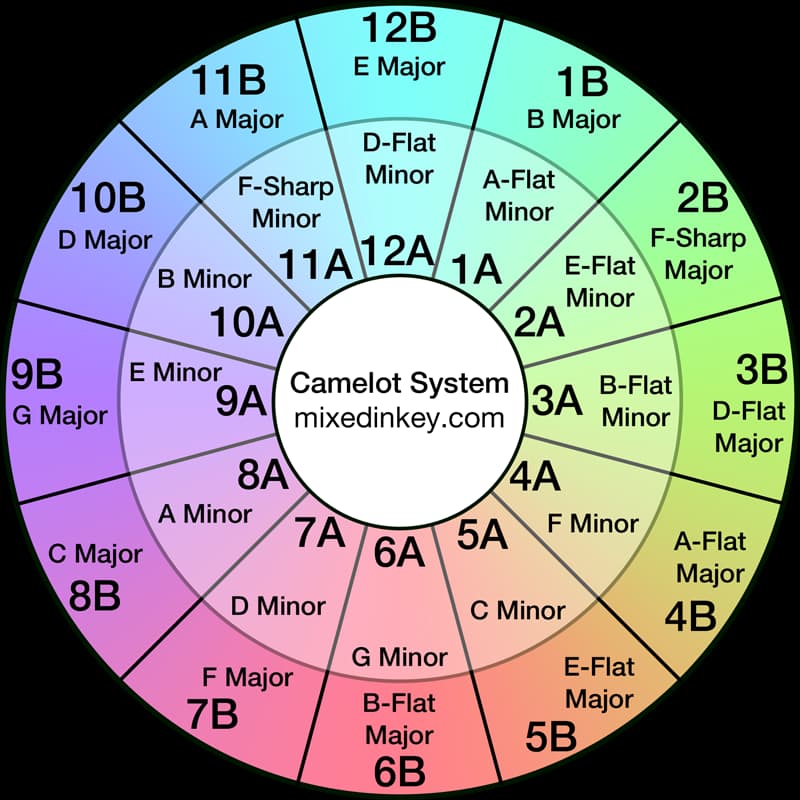
Hello and Welcome to DJs In Reno where I cover all things DJ related. Today, I am going to be ranking the top 5 Harmonic Mixes. This is based on the full tier list in my Harmonic Mixing Cheat Sheet, where I rank all 20 harmonic mixes from S tier down to F tier. You can also read a free preview of the first five mixes in my Ultimate Harmonic Mixing Tier List article. So, if you haven't seen those, go check them out!
1.) +0 (Power Block Mix)
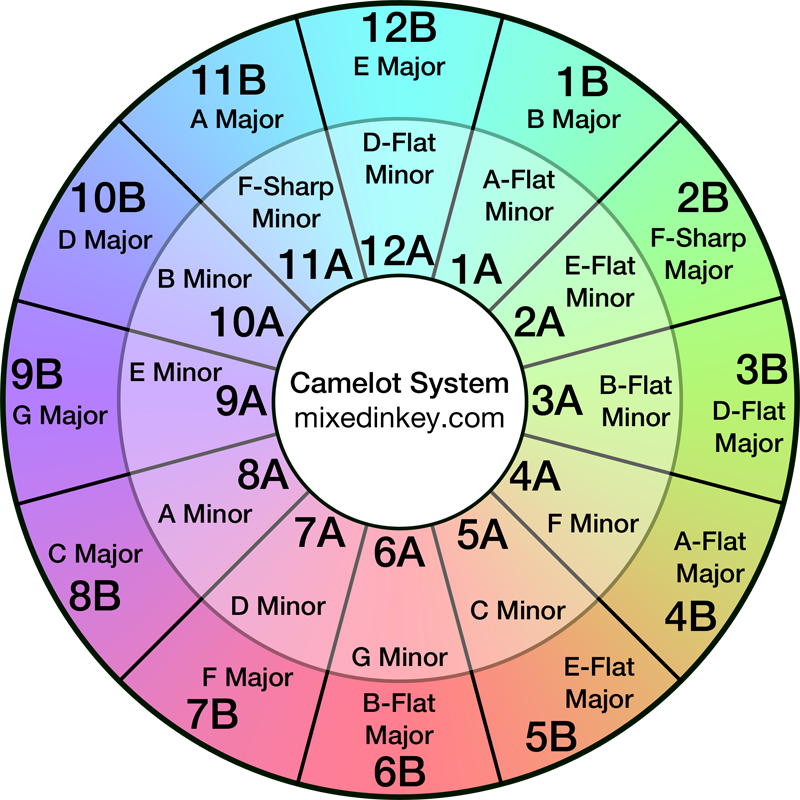
The +0, or the Power Block Mix, is the only mix I rank S tier, and it's the most fundamental Harmonic Mix there is. Actually, it's technically not even a harmonic "mix", because the destination key is the same as the original key. That means the two songs share all 7 notes, for 100% harmonic compatibility. It simply cannot clash.
It's called the power block mix because DJs will often play about 4 songs of the same key in a row, before switching to a different key. This consistency builds energy exponentially on the dancefloor.
If you find two songs with the same key, and align them properly, you can even get the vocals from each track singing with each other. Just make sure that they don't overlap!
One warning: don't overdo it. All of the other transitions on this list will either increase or decrease the energy of the mix and the dancefloor. With the +0, I am staying in the same key from song to song. While this sounds ok if you only do about 4 songs in the same key before transitioning, I generally wouldn't recommend doing more than that. Part of having a fantastic DJ Set means that the songs, vibe, and speed are constantly changing.
2.) +0C (Vertical Mix)
Next on my list of the top 5 Harmonic Mixes is the +0C, or Vertical Mix, the first of my two A tier picks. C stands for Scale Change, and a Capital C means that I am moving from the minor Scale to the Major Scale. I created this notation because I thought it was a great way to illustrate moving around the Camelot Wheel.
The Camelot Wheel is made up of two circles: the inner circle of minor keys, and the outer circle of major keys. With the Vertical Mix, I move straight outward on the wheel, from a minor key to its relative Major. For example, 12A to 12B.
Here's the magic: the relative Major shares all 7 notes with the original key. That's 100% harmonic compatibility, just like the Power Block, but the feel of the music shifts from darker to brighter, with a slight energy boost. It's the easiest scale change transition there is, and it's a fantastic way to lift the room without any risk of a clash.
3.) +3C (Mood Shift Mix)
Number 3 on my list, and my second A tier pick, is the +3C, or Mood Shift Mix. Here I am moving from a minor key to its parallel Major. For example, 12A to 3B. The tonic note stays the same, but the scale flips from minor to Major.
Only 4 of the 7 notes are shared, so this transition is more dramatic than the Vertical Mix. That's exactly the point: it delivers a true mood shift, plus a medium energy boost. When you want the dancefloor to FEEL the change, this is the one.
I explained my notation in more detail in the Harmonic Mixing Cheat Sheet PDF, available as a free download. So again, if you haven't checked that out, be sure to grab your copy!
This mix received very positive feedback online.
I created a mashup using this harmonic mix, and it's probably the best one I've ever discovered. It's called one more milkshake, and it utilizes the song One More Time by daft punk, and milkshake by kellis.
4.) +1 (Energy Boost Mix)
Number 4 on my List of the top 5 Harmonic Mixes, and my first B tier pick, I have the +1, or Energy boost mix. This Harmonic Transition is going to keep things moving gently in an upwards direction. 6/7 notes are still shared with the original key, so this Mix is Extremely harmonically compatible. It's going to boost the energy of the mix by a perfect Fifth. Important note: Each key on the Camelot Wheel is separated from its neighbors by a single perfect 5th. The energy boost mix is steady, consistent, and it also changes the harmonics of your mix in a pleasant and gentle way. It's a great way to keep things fresh, interesting, new, and exciting.
Keep in mind that when you're djing, you generally want the energy to be going up. If you take your foot off the gas pedal, expect some of your crowd to leave the dancefloor. Sometimes, it does make sense to play a slow song, to give your crowd a break, and it also makes sense to slow things down a bit as you approach the end of your set. But generally speaking, once you have your crowd's attention, you want to keep it as long as possible.
5.) +0c (Reverse Vertical Mix)
Rounding out my top 5, another B tier pick, is the +0c, or Reverse Vertical Mix. A lowercase c means that I am moving from the Major Scale to the minor Scale. This is the mirror image of the Vertical Mix: I move straight inward on the wheel, from a Major key to its relative minor. For example, 12B to 12A.
Just like the Vertical Mix, all 7 notes are shared, so it is 100% harmonically compatible. The difference is the direction of the mood: the music shifts from brighter to darker, with a slight energy drain. That makes it the perfect tool for when you WANT to bring things down smoothly, like easing out of a peak, setting up a slow song, or winding down the end of a set.
Want to see all 20?
The full ranking of all 20 harmonic mixes is in the Harmonic Mixing Cheat Sheet.
Conclusion
There are many fantastic harmonic Mixes, and the complete ranking lives on one page behind the decks with me every weekend.
Want more instruction in mixing / DJing? Check out my DJ lessons!